Workplace Culture
-
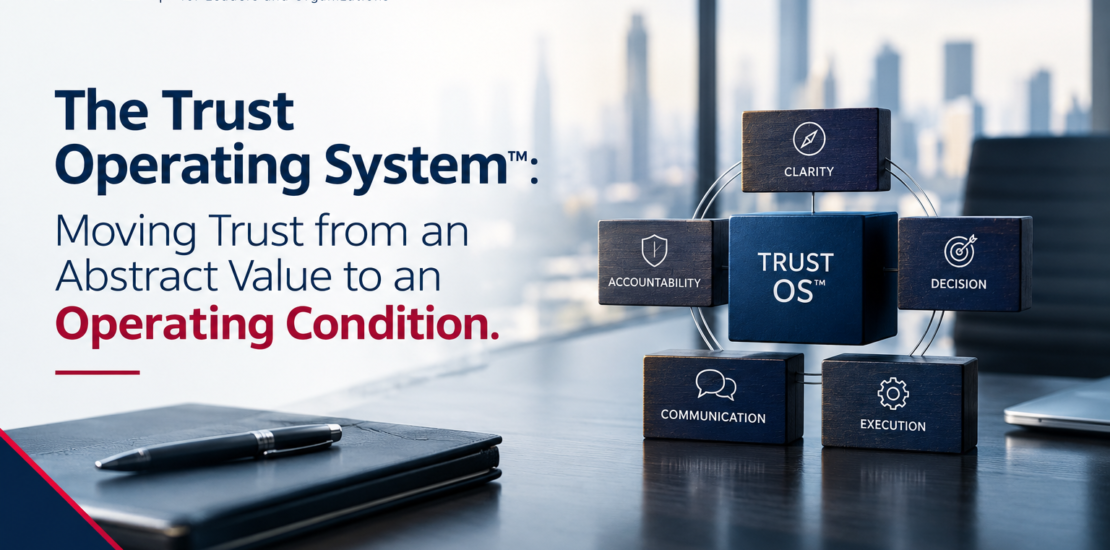
The Trust Operating System™: Moving Trust from an Abstract Value to an Operating Condition
- October 9, 2026
- Posted by: Nkem Mpamah
- Category: Organizational Trust
No Comments
Reading Time: 10 minutesMost leadership literature treats trust as an emotional, interpersonal, or cultural sentiment—something built through bonding exercises, open-door policies, or inspirational rhetoric.
-
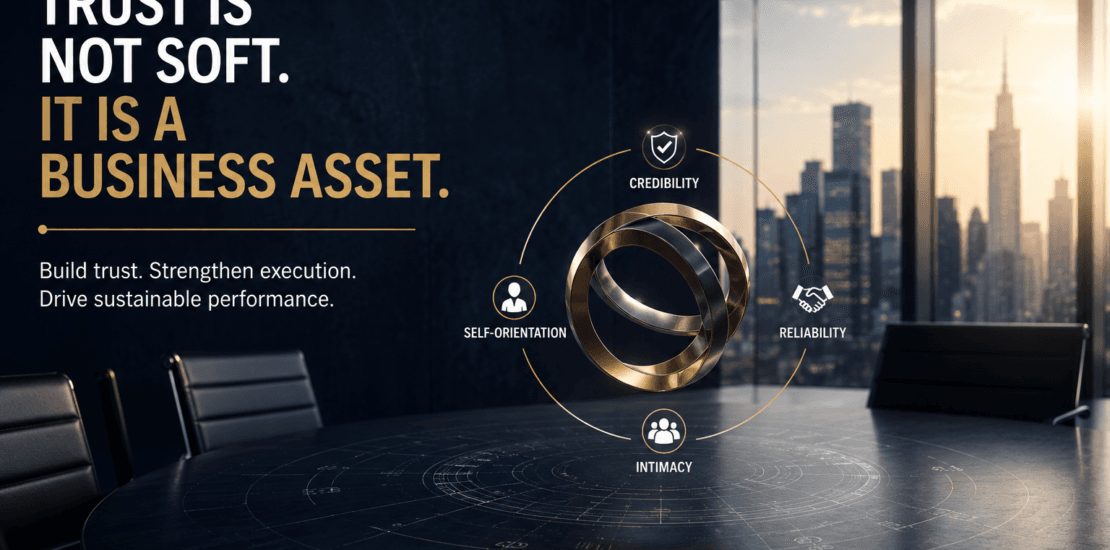
Trust Is Not Soft: Trust Is a Business Asset
- June 24, 2026
- Posted by: Nkem Mpamah
- Category: Organizational Trust

Reading Time: 6 minutesIf you consider how people choose the organizations they willingly buy from, partner with, recommend, or invest in, you’d notice that trust is almost always their deciding factor. Think about the last time you engaged the services of a lawyer, accountant, or financial advisor; what triggered your decision? Trust, of course! The same logic applies in organizations.
-
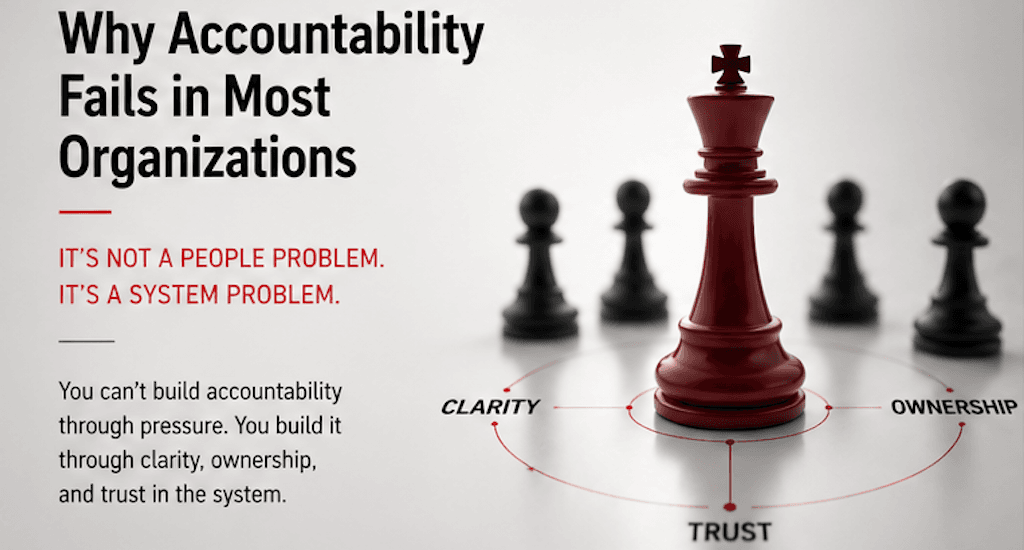
Why Accountability Fails in Most Organizations
- June 9, 2026
- Posted by: Nkem Mpamah
- Category: Leadership Alignment

Reading Time: 4 minutesAccountability in organizations often fails not because people lack discipline, but because the trust environment does not support ownership. When trust is weak, people avoid responsibility, delay action, or shift blame. True accountability is not enforced through pressure. It is built through a system where ownership is clear, supported, and safe to carry.
-
When Leaders Agree in Meetings but Act Differently Outside Them
- June 2, 2026
- Posted by: Nkem Mpamah
- Category: Leadership Alignment

Reading Time: 4 minutesLeadership alignment in organizations breaks down when agreement in meetings does not translate into consistent action outside them. Many executive teams appear aligned in the room, yet behave differently afterward.
-
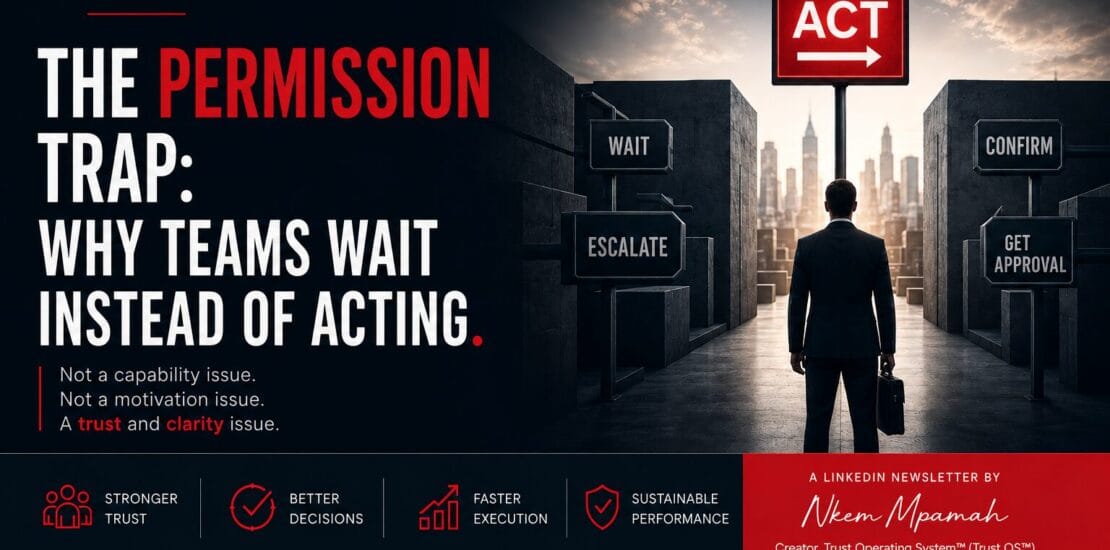
The Permission Trap: Why Teams Wait Instead of Acting
- May 5, 2026
- Posted by: Nkem Mpamah
- Category: Workplace Behaviour
Reading Time: 5 minutesThink about the last time a project moved more slowly than expected. The team was capable, resources were available, and the work itself was clear. On paper, there was no reason for delay. Yet progress stalled.
-
How to Build a High-Trust Culture and Boost Performance in Your Law Firm
- January 7, 2026
- Posted by: Nkem Mpamah
- Category: Organizational Trust
Reading Time: 5 minutesWhat truly separates high-performing law firms from those that merely survive is not legal expertise or years in practice; it is trust. Trust influences how clients choose a firm, how partners collaborate, and how associates perform under pressure. When trust is weak, firms struggle with retention, internal friction, and stalled growth. When trust is strong, clarity, confidence, and consistent performance follow.
In this article, Nkem Mpamah explains why trust is not a soft concept but a strategic operating system for law firms. Drawing from the Trust Operating System™ (TOS™), he outlines five practical steps law firm leaders can use to build a high-trust culture that boosts performance.
-
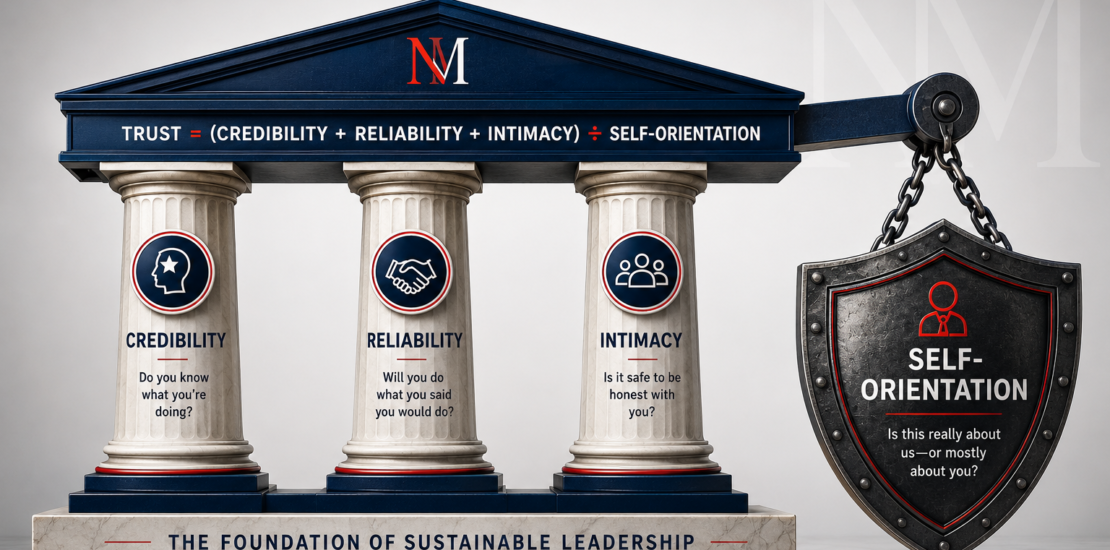
The Four Pillars of Trust That Define Sustainable Success
- December 10, 2025
- Posted by: Nkem Mpamah
- Category: Workplace Behaviour
Reading Time: 5 minutesIn today’s frantic business world, many professionals are focused on the wrong thing. While many chase aggressive marketing and hype, those who create enduring success master one crucial asset: trust. True leaders and entrepreneurs, whether in law, consulting, accounting, or coaching, focus on building trust with clients and teams.