
-
The Hidden Factor Behind Fast-Growing Organizations
- June 16, 2026
- Posted by: Nkem Mpamah
- Category: Execution
No Comments
Reading Time: 4 minutesOrganizational speed is the hidden factor behind the growth of fast-growing organizations. While many assume growth comes from strategy, talent, or capital, the real driver is how quickly decisions turn into action. When trust is strong, organizations move faster. When it is weak, growth slows, even with the right resources in place.
-
When Leaders Agree in Meetings but Act Differently Outside Them
- June 2, 2026
- Posted by: Nkem Mpamah
- Category: Leadership Alignment
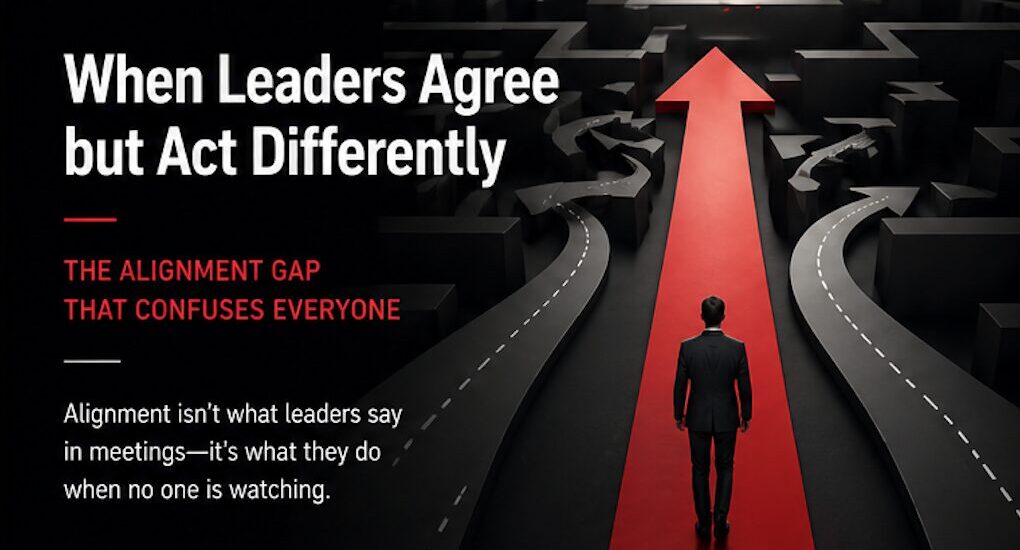
Reading Time: 4 minutesLeadership alignment in organizations breaks down when agreement in meetings does not translate into consistent action outside them. Many executive teams appear aligned in the room, yet behave differently afterward.
-
Why Work Doesn’t Get Done (Even When Everyone Agrees)
- May 26, 2026
- Posted by: Nkem Mpamah
- Category: Execution
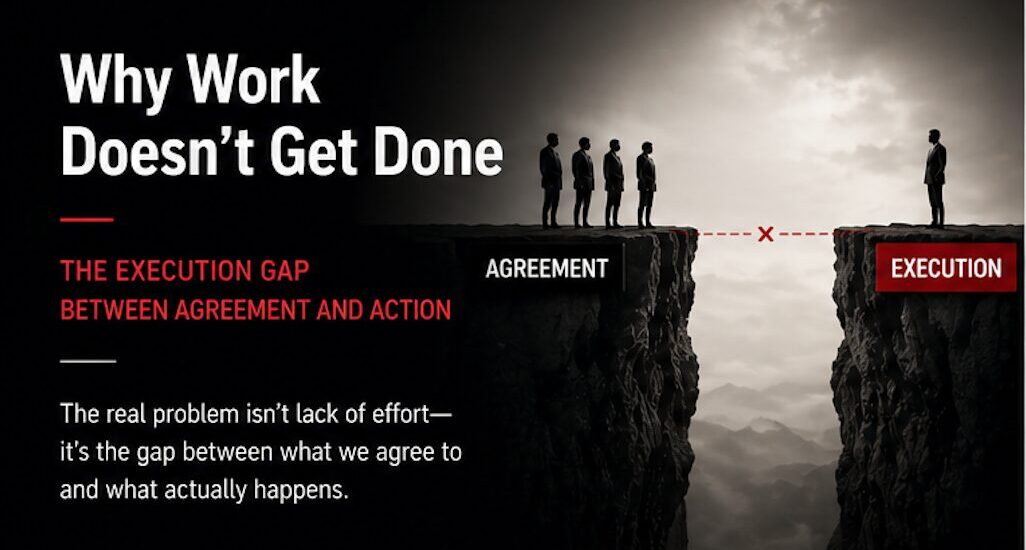
Reading Time: 4 minutesExecution in organizations breaks down when agreement does not lead to action. Many teams align in meetings, yet work still doesn’t move forward. This gap is rarely caused by poor strategy. It is usually the result of weak organizational trust, where decisions are not translated into consistent execution.
-
Why Some Teams Decide Faster Than Others (And It Has Nothing to Do With Experience)
- May 19, 2026
- Posted by: Nkem Mpamah
- Category: Decision Making

Reading Time: 4 minutesWhen one team moves faster than another, most leaders assume it comes down to experience. It rarely is.
Highly experienced teams still stall. They revisit the same conversations, delay commitments, and spend more time aligning than actually moving. Meanwhile, less experienced teams sometimes execute with speed and confidence.
The difference isn’t capability. It’s the environment in which decisions are made. -
Stop Measuring Effort. Start Measuring Decision Speed
- May 12, 2026
- Posted by: Nkem Mpamah
- Category: Decision Making

Reading Time: 4 minutesDecision-making in organizations is the process of turning information into clear, timely action. It determines how quickly teams move, how effectively work gets done, and how consistently results are delivered. When decision-making is slow or unclear, execution stalls—even when effort remains high.
-
Why Teams Get Stuck In Endless Decision Loops
- April 27, 2026
- Posted by: Nkem Mpamah
- Category: Decision Making

Reading Time: 4 minutesWhen a decision keeps coming back to the table, most leaders assume it’s still being refined. It isn’t. It’s only being avoided — and there’s a reason why.
-
Trust Is Not a Feeling. It’s How Work Moves
- April 22, 2026
- Posted by: Nkem Mpamah
- Category: Organizational Trust

Reading Time: 4 minutesWhen trust is weak, everything becomes heavier than it should be. More meetings get scheduled, not because there is more to discuss, but because people are unsure what will happen if they act alone.
-
How to Build Organizational Trust as a Leadership Operating System
- February 17, 2026
- Posted by: Nkem Mpamah
- Category: Organizational Trust

Reading Time: 6 minutesMost leaders obsess over strategy, talent acquisition, and flawless execution. Yet they overlook organizational trust, the invisible system that determines whether any of these investments actually deliver results.
- Lagos - Nigeria, Cambridge - United Kingdom
- info@nkemmpamah.com
- +234 803 829 4647